guide
How Immigration Queues Actually Work in Vietnam
Why the immigration line moves differently flight to flight - flight banks, staffing patterns, and the peak periods worth planning around.
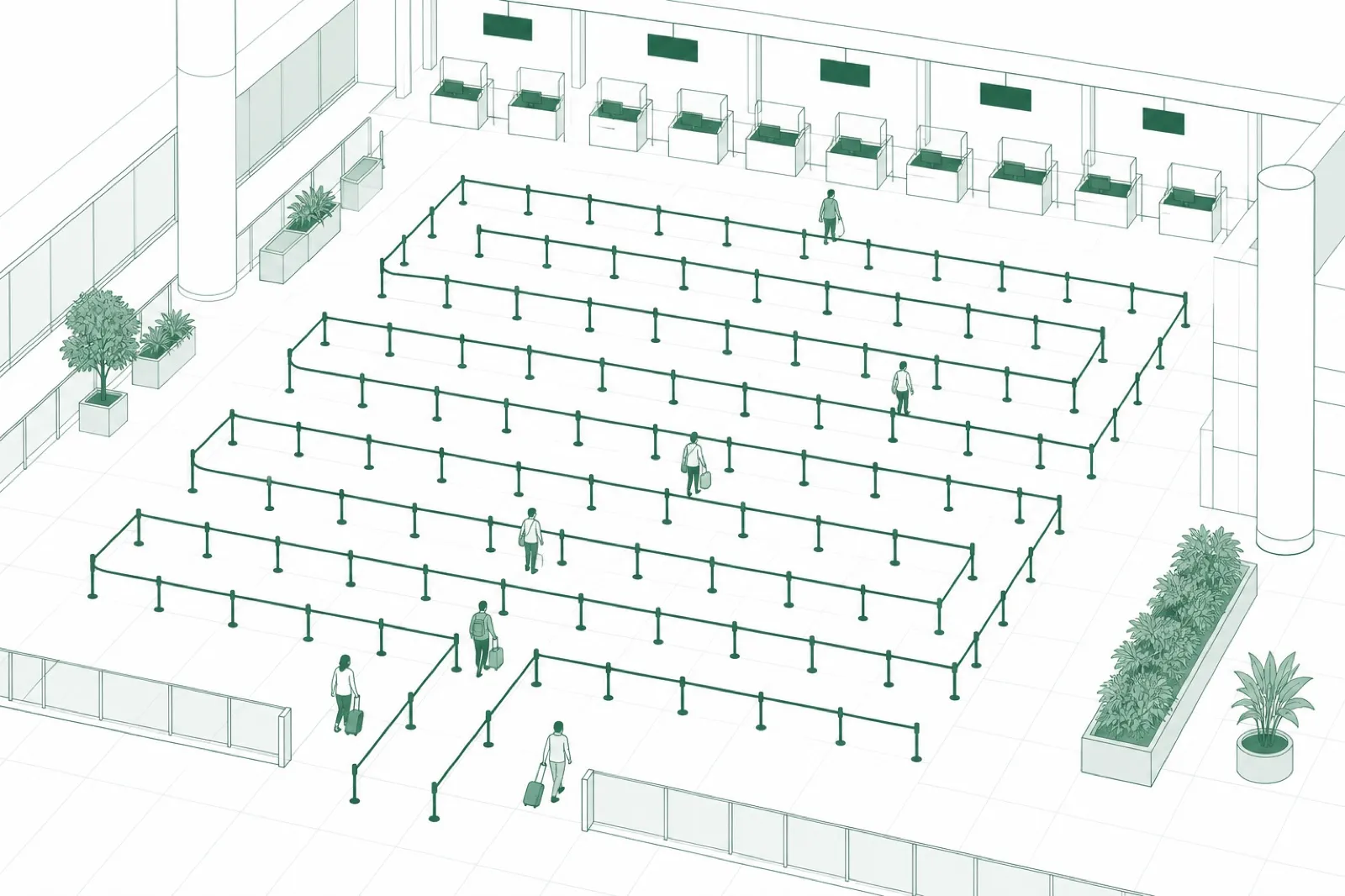
Why the same flight can mean two different queues
Fly into Ho Chi Minh City or Hanoi twice, on the same route, at the same hour, and you can still meet a completely different immigration hall each time. That is not random. The length of the line has almost nothing to do with your own flight and almost everything to do with which other flights landed around the same time, how many counters are staffed at that exact hour, and how far along the arriving crowd already is by the time you reach the hall. Understanding that shifts the question from “is this airport slow” to “did I land into a busy window” - and the second question is one a traveller can actually plan around.
What a flight bank is, and why it decides more than the clock
Airports schedule international arrivals in clusters, not evenly through the day, because long-haul routes tend to land at similar hours from similar regions - a run of red-eyes from the Gulf and Europe in the early morning, a cluster from Northeast Asia around midday. When several wide-body aircraft touch down within twenty or thirty minutes of each other, several hundred passengers can reach passport control at close to the same moment. That cluster is a flight bank. Land in the middle of one and every counter is already working through the flight ahead of yours; land in the gap between banks and you can walk straight up to an open desk. Your own scheduled time tells you almost nothing about which of those two situations you will meet - the airport’s traffic pattern that day does.
Staffing follows the schedule, not the line in front of it
Counter staffing is planned against the published flight schedule, not against how long the queue happens to be at any given minute. When a bank lands close to shift-change hours, or when several delayed flights arrive together instead of spread out as planned, the number of open counters can lag behind the number of people who just walked in. None of this reflects an officer working slowly - each traveller’s documents still get the same individual check, and the pace of that check does not change. What changes is simply how many people are in the room waiting their turn while it happens.
The predictable peaks: overnight banks, holidays, and Tet
A few patterns hold fairly consistently across Vietnam’s international airports. Early-morning arrival banks from long-haul Western routes tend to be the busiest single window of the day. Public holiday weekends and, above all, the week around Tet compress travel into a shorter calendar window than the rest of the year, so halls that are comfortable on an ordinary Tuesday can run at a very different pace during that stretch. None of this is a fixed number of minutes - it moves with staffing, aircraft mix, and how many flights are running late that particular week - so treat it as a shape to expect rather than a promise of any exact wait.
Where an escorted process changes the shape of the wait, and where it can’t
A fast track service does not open a separate door around immigration and it cannot shorten how long the officer spends on any individual traveller - every arriving passenger clears the same check, with their own documents, and the decision at the counter is always the officer’s alone. What an escort changes is standing in the room while that happens: being met at the gate, walked directly to a priority lane where one exists, and kept moving through the queuing structure rather than working it out cold in an unfamiliar hall during a busy bank. Whether that is worth arranging for a given trip usually comes down to how tight the onward connection or car pickup is, and how confident you feel navigating a crowded arrivals hall on limited sleep.
What to expect regardless
Bring your travel documents ready to present rather than searching for them at the counter - that alone shortens your own few minutes at the desk more than almost anything else does. Beyond that, treat any wait estimate you read, including this one, as a range shaped by which flight bank you land into on the day, not a fixed figure. If your schedule has little slack - a short layover, a fixed pickup time - it is worth reading how each major airport’s peak hours actually line up before you travel, so the queue you meet is one you expected rather than one you’re surprised by.