guide
Fast Track at Vietnam's International Airports
A nationwide look at how fast track works at Vietnam's international airports, who provides it, and how the escorted process actually runs.
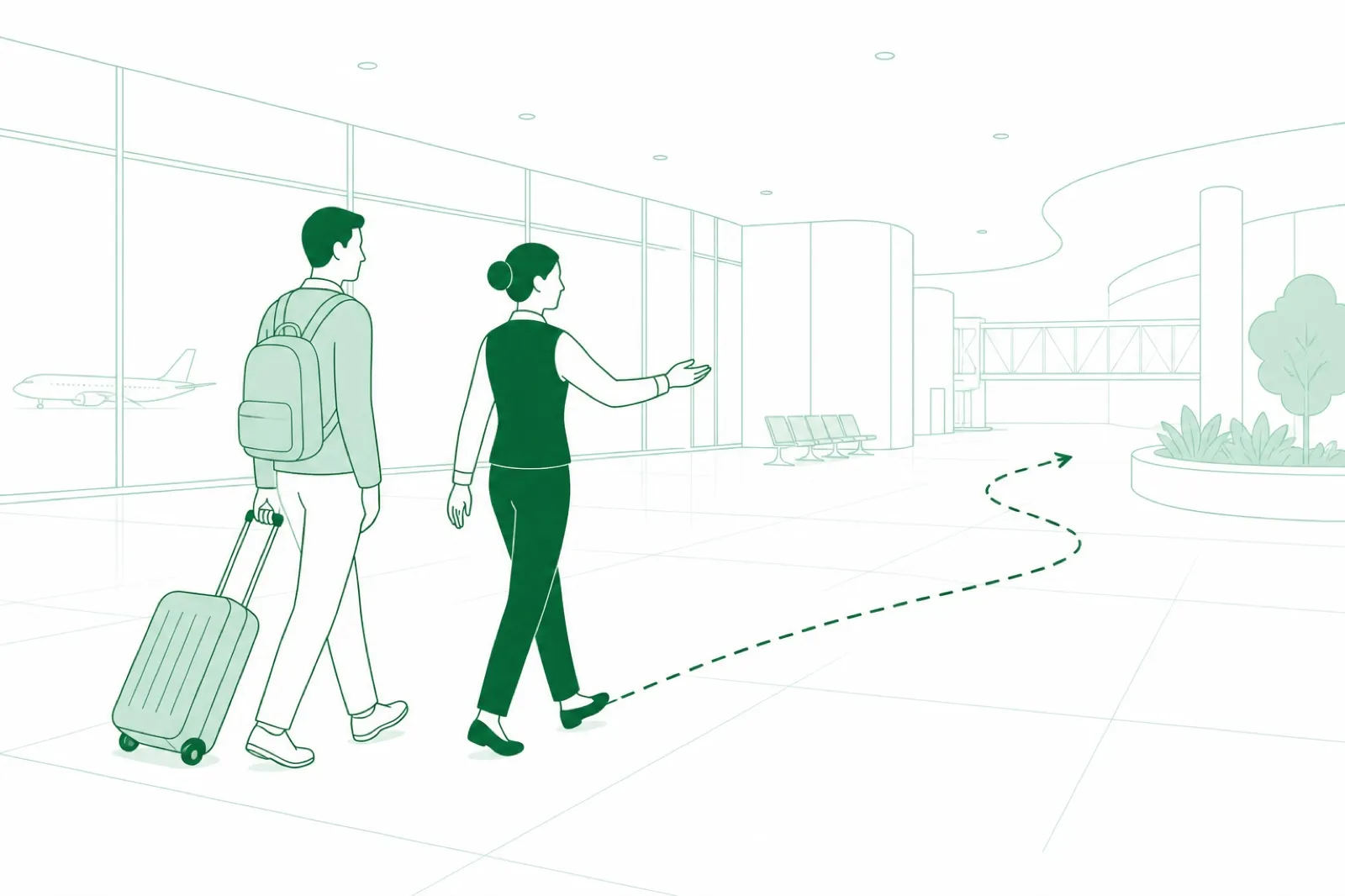
What “fast track” means at a Vietnamese airport
Fast track is not a shortcut around passport control, security, or customs — no service can do that, and none should claim to. What it actually buys is a priority path through those exact checkpoints: a staff member meets you inside the terminal, walks you to a dedicated or shorter lane, and keeps you moving through each stage that every other traveller also has to clear. You still show your own documents. An immigration officer still makes every decision on your case. What changes is the walk between checkpoints and, often, the queue you join once you get there.
How the escorted process actually works
The shape of the service is broadly the same at every international airport in the country, arrival or departure. On arrival, someone is waiting at the jet bridge or gate with your name, guides you past the general flow toward a shorter immigration lane, and stays with you until baggage reclaim or the arrivals hall. On departure, the same person meets you at the kerb or check-in hall, moves you through check-in, security, and passport control, and hands you off close to your gate. None of that removes a step from the official sequence — it removes the uncertainty of finding it yourself in an unfamiliar building, often after a long flight.
Who provides it, and what they can and cannot do
Fast track in Vietnam is run by airport-affiliated ground handling companies and independent assistance agencies, usually the same firms that also offer meet-and-greet or porter add-ons at the gate. Whoever the provider is, their authority stops at the terminal doors: they cannot obtain, expedite, or influence government paperwork, and they cannot speed up a decision an officer is still making. Anyone with a question about entry documentation should raise it with the relevant government channels early, rather than assume a fast track booking will answer it.
Why the airports don’t all behave the same way
Ho Chi Minh City’s Tan Son Nhat and Hanoi’s Noi Bai carry the heaviest and most consistent international traffic, so their queues follow predictable flight-bank patterns through most of the year. Da Nang leans more seasonal, with periods of concentrated charter arrivals that can fill immigration halls faster than the terminal’s everyday rhythm suggests. Smaller gateways rarely see the same congestion at all. The practical result is that the same service means something different depending on where you land — see the Tan Son Nhat and Noi Bai pages for what actually happens at each one.
Deciding whether it’s worth arranging
For a traveller who lands mid-morning on a quiet weekday, a fast track booking may buy very little. For a red-eye arrival into a full flight bank, a short connection, a group travelling together, or anyone who simply doesn’t want to navigate a large unfamiliar terminal on unfamiliar sleep, it tends to earn its keep. There’s a dedicated breakdown of that trade-off on the is it worth it page, worth reading before you commit either way.
Booking basics
Booking is usually a matter of supplying a flight number, travel date, and passenger names ahead of time, then getting a confirmation back before you fly. It’s worth locking that in with enough lead time that a delayed or rescheduled flight doesn’t leave the assistance team waiting at the wrong gate — the booking page covers what information to have ready and how far ahead to arrange it. Vietnam’s future Long Thanh airport, expected to open as Ho Chi Minh City’s new international gateway around late 2026, will eventually need its own version of this guide — for now, this page and the airport-specific ones linked above cover the airports actually running fast track services today.