guide
Vietnam Arrival Fast Track, Step by Step
The escorted arrival sequence at a Vietnamese international airport, from the aircraft door through immigration, baggage and customs to the kerb.
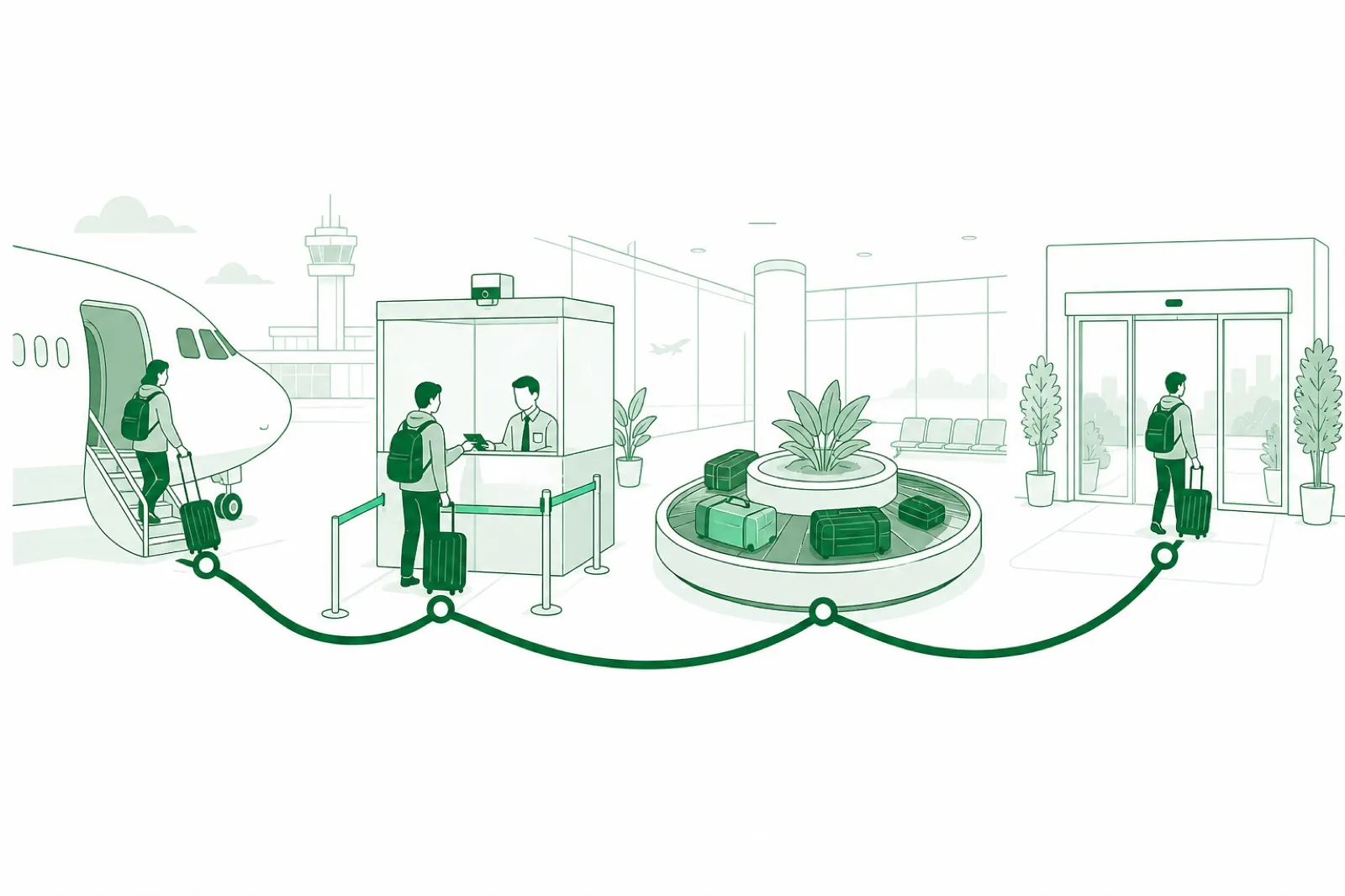
Booking a fast track arrival is easy to picture in the abstract and harder to picture in practice - what exactly does someone waiting at the aircraft door actually do for the next half hour? Here is the sequence in the order it happens, and what changes at each stage versus arriving on your own.
Off the aircraft, into the terminal
At most Vietnamese international airports, an assistant with a name board meets arriving passengers at the jet bridge or gate, before the general flow of the terminal has a chance to split people up. From there the walk to passport control is the same walk everyone takes - the same moving walkways, the same signage - except you are not reading it yourself while jet-lagged. This is also, in practical terms, the single sentence in this guide about meeting-and-greet: the escort’s presence at the gate is where that kind of help happens, and it is a small part of a longer process rather than a service on its own.
Through passport control
This is the step where “fast track” most concretely means something: being walked to a priority lane where the airport has one, rather than joining the general queue and working out which line is moving. It does not mean skipping the check itself. Every traveller, escorted or not, presents their own documents and answers to their own officer, who makes the decision alone - an assistant cannot speak for you at the counter or influence that decision in any way. Sort your passport and any required entry paperwork out in advance through the appropriate government channels, so everything is already in hand by the time you reach the hall; a service that promises otherwise is not describing what actually happens at the desk.
Waiting on baggage, with someone watching the belt
Once you’re through, the assistant typically walks with you to the correct reclaim belt and helps track down a trolley if you need one. The belt itself runs on the same timetable it would without an escort - nobody can move baggage handling faster from the terminal side - but not standing there squinting at a departures-style screen, uncertain which belt is yours, removes one more decision from a tired traveller’s list.
Customs, the same two channels everyone uses
Vietnam’s customs process is the standard green-channel, red-channel system: nothing to declare within the normal personal allowances, and you walk the green channel, typically with occasional spot screening; goods to declare, and you take the red channel. An escort does not change which channel you use or what happens inside it - that call is yours to make honestly, based on what you’re carrying, and the officer on duty decides everything from there. If you’re unsure whether something you’re bringing in needs declaring, check current allowance figures with Vietnamese customs before you travel rather than guessing at the counter.
Out through the arrivals hall
The doors into the public hall are usually the most disorienting part of any arrival on your own - a wall of drivers holding names, taxi touts, and signage in an unfamiliar layout. With an escort, this is typically where the walk ends: to a waiting car, a pre-arranged pickup point, or simply to the point where your onward transport is easiest to find. How that leg into the city usually goes varies noticeably between airports, so it’s worth reading up on your specific one beforehand.
What this sequence doesn’t include
Nowhere in this walkthrough does the process bypass immigration, security, or customs - every stage above is one every traveller passes through, escorted or not, and the officers staffing each one make every decision about every passenger. What changes with an escort is navigation and pace through a process that already exists, not the process itself. If your trip involves a short connection on the other side or a car that can’t wait, that distinction is usually the whole reason to arrange one - and booking one mostly comes down to giving the provider your flight number and arrival date well ahead of the trip.